Cross-Border
Cooperation Programme
Albania – Kosovo 2021–2027
Funded by European Union
€8.4 million EU CONTRIBUTION
About the Programme
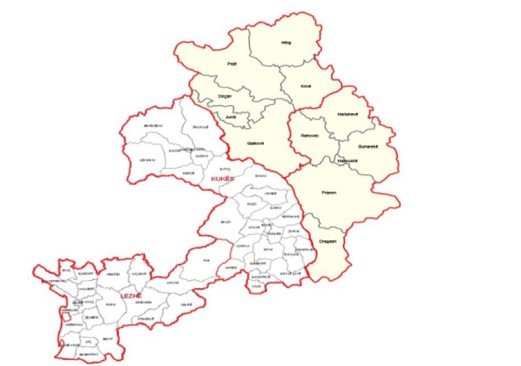
Programme Area: Lezha & Kukës (Albania); West & South Economic Regions (Kosovo)
Implementation Period: 2021–2027
The objective of this EU-funded programme is to promote good neighbourly relations, foster Union integration and contribute to social, economic and territorial development of the programme cross-border area by improving environment protection and preservation of resources, and developing sustainable nature-and-culture tourism
Programme partners
- Albania: State Agency for Strategic Planning and Aid Coordination, National IPA Coordinator, Lead Partner
- Kosovo: Ministry of Local Government Administration, partner
- European Commission represented by EU Delegation to Tirana: Contracting and monitoring Authority
- Joint Technical Secretariat: Lezha (Albania) and Antenna Office Prishtina (Kosovo)
The programme covers 8,335 km² and a population of 936,000 inhabitants, targeting:
Albania
- The Region of Kukës, including the municipalities of Kukës, Has and Tropojë; and
- The Region of Lezha, including the municipalities of Lezha, Mirdita and Kurbin
Kosovo
- South Economic Region composed of 6 municipalities: Prizren, Dragash/Dragaš, Rahovec/Orahovac, Suhareka/Suva Reka, Malisheva/Mališevo, and Mamusha/Mamuša.
- West Economic Region composed of 6 municipalities: Peja/Peć, Deçan/Dečani, Gjakova/Đakovica, Istog/Istok, Klina and Junik.



Programme Strategy and objectives
Priority: Protecting the Environment under TC 2: Greener and improved resource efficiency -45% of budget
Thematic priority 2: Protecting the environment, promoting climate change adaptation and mitigation, risk prevention and management
Objective: Valorization, protection, and preservation of environmental resources in the cross-border territory
Expected Results:
- Strengthened local capacity for climate action and disaster risk reduction
- Better management of natural resources and biodiversity
- Joint monitoring, awareness, and small-scale investments in environmental resilience
Priority: Promoting Sustainable Tourism & Cultural Heritage under TC 4 Improved business environment and competitiveness- 45%of budget
Thematic priority 5: Encouraging tourism and promoting cultural and natural heritage
Objective: Development of sustainable, nature-and-culture tourism contributes more to cross-border economic development.
Expected Results:
- New cross-border tourism products and services
- Promotion of local heritage and eco-friendly destinations
- Support for MSMEs and innovation in tourism
Technical Assistance – 10% of budget
Ensures efficient and transparent programme implementation, coordination, and visibility.
Thematic Cluster 5: Improved capacity of local and regional authorities to tackle local challenges is now mainstreamed across all IPA III priorities
Aligned with:
- EU Green Agenda for the Western Balkans
- Economic and Investment Plan for the Western Balkans
- EUSAIR Strategy
Who can apply for project proposals?
- Public, Local & regional authorities
- NGOs and CSOs
- Academic, cultural, environment related institutions
- Agencies with programme related scope
Programme documents
Programme documents
- Action Document for_ Cross-border cooperation programme Albania – Kosovo for 2021-2027
- CERTIFIKIMI I PERKTHIMIT-Albanian-IPA CBC Shqiperi-Kosove 2021-2027_Approved-SQ (1)
- COMMISSION IMPLEMENTING DECISION of 23.5.2022 on the financing of the cross-border cooperation programme Albania – Kosovo_ for 2021-2027
Implementation documents
Implementation documents
- Ligj-nr.-9936-date-26.06.2008 Per-menaxhimin-e-sistemit-buxhetor ne Republiken e Shqiperise
- ligj-2024-12-03-115-Per-buxhetin-e-vitit-2025
- Ligj_nr.139-2015_date_17.12.2015_Per_vetqeverisjen_vendore
- Ligj_10296_8.7.2010
- 6.Ligji-68-2017-Per-financat-e-veteqeverisjes-vendore
- Udhezimi-Plotesues-Nr.2-date-24.01.2025-Per-zbatimin-e-buxhetit-te-vitit-2025 (1)
- Udhezim-Nr.-10-date-12.07.2024-Per-regjistr-perdor-rakord-rap-dhe-publ-e-fondeve-te-FH-ne-kuadrin-e-marreveshjeve-nderkombetare
- Udhezim-plotesues-nr.-2.1-date-11.07.2025-Per-nje-shtese-ne-Udhezimin-nr.-2-date-24.01.2025-te-ministrit-te-financave-Per-zbatimin-e-buxhetit-te-vitit-2025
- Udhezim-nr.-9-date-20.3.2018-Per-procedurat-standarde-te-zbatimit-te-buxhetit
- Udhezim-i-perbashket-MF-MSHPV-granti-i-performances
- Hapat per hapjen e llogarise
- LIGJI_NR._08_L-148__PËR_RATIFIKIMIN_E__MARRËVESHJES_SE_PARTNERITETIT_PËR_KORNIZËN___FINANCIARE_NDËRMJET_REPUBLIKËS_SË_KOSOVËS_DHE_KOMISIONIT_EVROPIAN____
- MARREVESHJE_FINANCIARE_TREPALESHE_PER_PROGRAMIN_E_BASHKEPUNIMIT_NDERKUFITAR_IPA_III_PER_VITET_2021-2027_NE_MES_TE_REPUBLIKES_SE_KOSOVES_SHQIPERISE_DHE BE
Programme Structures
Contracting Authority
The European Commission, via the EU Delegation in Tirana, acts as the Contracting Authority. It guarantees financial accountability and compliance with EU rules. Through Direct Management, the Commission provides Technical Assistance grants to Saspac (Albania), as lead partner, and the Ministry of Local Government Affairs (Kosovo), and awards grants to successful applicants from programme calls.
Operating Structures (OS)
In Albania: State Agency for Strategic Programming and Aid Coordination, also National IPA Coordinator (NIPAC) | In Kosovo: The Ministry of Local Government Administration (MLGA)
These structures are responsible for programme implementation at national level, coordination with stakeholders, and ensuring compliance with EU and national rules
Joint Technical Secretariat (JTS)
The Joint Technical Secretariat (JTS) serves as the operational branch of the programme, responsible for the day-to-day implementation, monitoring, and coordination of activities.
Lezha, Albania (Main Office) | Pristina, Kosovo (Antenna Office)
The JTS prepares calls for proposals, provides assistance to beneficiaries, organises training activities, ensures programme visibility, and reports to both the Operating Structures (OS) and the Joint Monitoring Committee (JMC).
Joint Monitoring Committee (JMC)
The JMC is the main decision-making body overseeing programme performance. Its responsibilities include:
- Approving calls for proposals and defining priorities, objectives, and expected results.
- Reviewing progress of programme indicators before publication of calls.
- Coordinating with other EU and donor programmes to avoid overlap and increase synergies.
- Considering recommendations from local and national stakeholders, as well as the donor community
The Joint Monitoring Committee (JMC) consists of appointed representatives of both beneficiaries, Albania and Kosovo. It includes the operating structures, line ministries aligned with the programme’s thematic priorities, state authorities responsible for civil society, and the European Commission in its capacity as observer
IPA II Programming period
Funded by the EU with €8.4 million, the IPA II CBC Programme Albania- Kosovo supported joint efforts to strengthen good neighbourly relations and promote sustainable, inclusive socio economic development in cross border regions.
Implemented from 2016 to 2023, the programme laid the foundations for IPA III (2021–2027). Four calls for proposals led to 13 contracted projects—10 completed, and 3 ongoing, with expected completion by end-2025 and 2026. Over 95% of project funds and 86% of technical assistance resources have been successfully contracted.
- 30% of the target population involved in environmental awareness activities
- 5 CSO–local government partnerships for biodiversity management
- 36% of the CBC area covered by environmental strategies
- Tourist visits increased by 20%
- 11 new cross-border tourism products developed
- 2,000+ participants in new cultural events
- 384 young people trained through lifelong learning
- 3 youth exchange networks sustained beyond programme funding
Lessons Learned
The IPA II CBC Programme highlighted the vital role of strengthening municipal capacities in planning, procurement, and project management. Empowering local actors ensures more effective and sustainable cross-border interventions while coordination with national instruments helps align CBC results with broader strategies to avoid overlaps and ensure lasting impact.
Calls for proposals
1st Call for Proposals under IPA III has been launched!
The call is open from 9 September 2025- 24 October 2025
Please click the link below for more information:
Link to information session slides: Presentation Slides
Indicative Definitions of Programme Indicators: Handbook IPA CBC AL-KS 2021-2027
Clarifications and corrigendums:
Information on Calls for Proposals
IPA II programming period
IPA III programming period
No documents uploaded yet